
Imparare a insegnare arte visiva. Viaggio nell’orizzonte di un sistema complesso
Angela Vettese
- quaderni d’arte
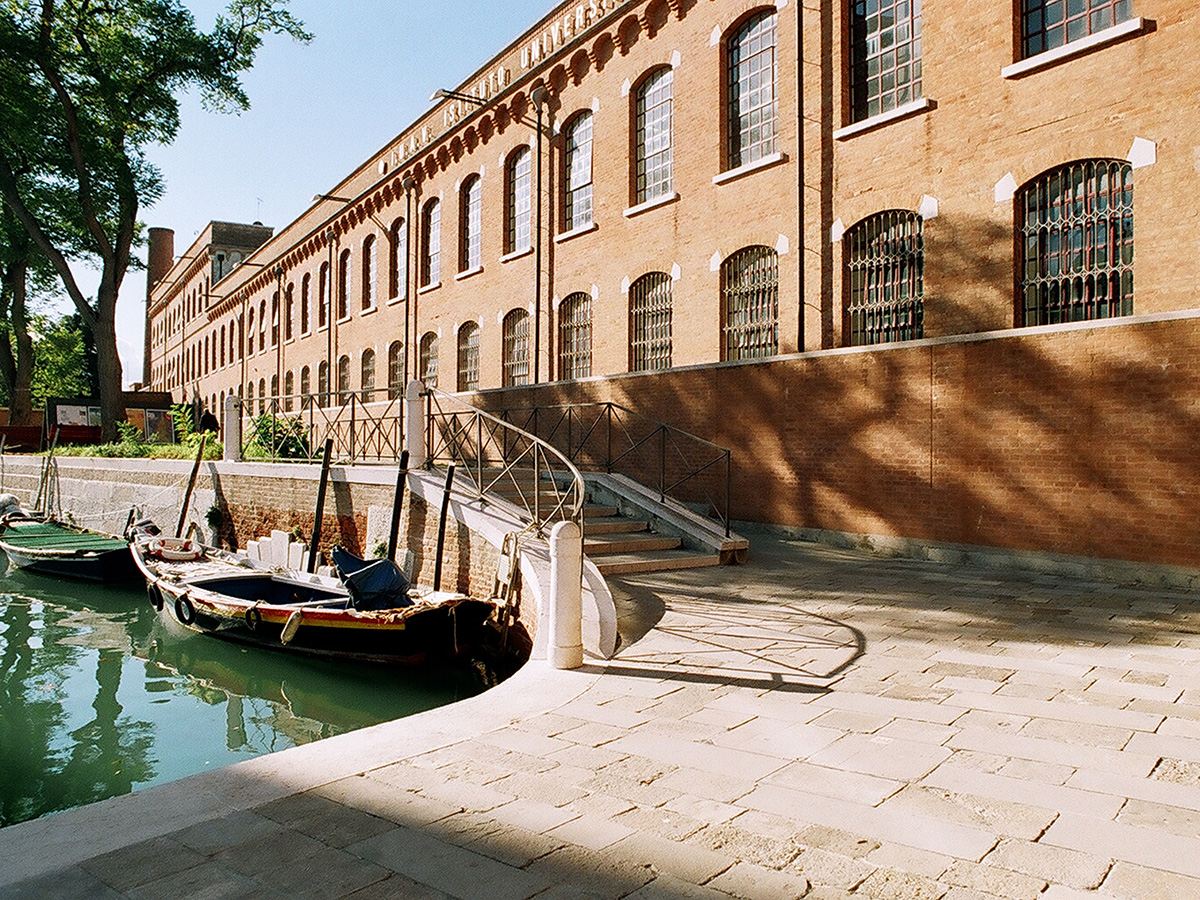
- Cotonificio veneziano, una delle sedi dell’Università IUAV di Venezia
Si può insegnare a fare arte? Molti dicono di no. E tra gli artisti italiani ve n’è la prova, se si considera quanti siano gli autodidatti del settore arti visive, anche soltanto in ambito italiano: da Alberto Burri a Giuseppe Capogrossi e Cesare Pietroiusti, tutti medici; da Stefano Arienti, botanico, al ‘senza titolo’ Maurizio Cattelan. Si può, in effetti, fare come quest’ultimo, che la laurea l’ha presa nel tempio del dissenso, la stessa facoltà di Sociologia di Trento in cui aveva studiato Renato Curcio, ma ad honorem e dopo una carriera attraversata senza complessi solitamente generati dall’assenza del ‘pezzo di carta’. Tuttavia, di solito non va così. Il sistema delle accademie, private o pubbliche, non solo esiste ma è, persino, pletorico, tale da dare la sensazione che gli studenti ci vadano a perdere anni, i docenti a prendere uno stipendio magro, e che il sistema dell’Alta Formazione (AFAM) sia stato creato, riformato, ampliato, per inventare bacini di lavoro pubblico e di clientele elettorali o personali.
Nel frattempo, date le contraddizioni che distinguono l’Italia, restiamo un Paese che potrebbe vivere d’arte e crede di potere formare migliaia di artisti all’anno tra studenti di accademie, conservatori, DAMS e istituti privati come lo IED, mentre non investe per qualche dirigente in più (ora sono due) assunto con concorso e per competenze nei quattordici musei pubblici di Venezia (MUVE), o per la posizione di direttore artistico al Palazzo Reale di Milano. La presidenza del MAXXI resta eminentemente politica, con conseguente cambio di curatori ogniqualvolta il carro dei vincitori cambia guida, e, in sostanza, nessun luogo italiano di esposizione e promozione dell’arte contemporanea risulta godere di un vero prestigio internazionale, a eccezione del caso, longevo e miracoloso, della Biennale di Venezia. Risultato: nel corso della fiera londinese Frieze, a parte alcuni maestri come Fontana, Manzoni, i poveristi o Salvo, che registrano encomiabili risultati in asta, nessun artista italiano viene degnamente rappresentato, tantomeno quelli under 40, di cui al massimo si è visto passare qualche breve film nella rassegna dell’ICA. Allora a cosa serve la nostra pletora di istituti di formazione?
Tutti conosciamo i grandi nomi nel sistema dell’arte italiano, da curatori come Francesco Bonami, Massimiliano Gioni, Cecilia Alemani, Vincenzo De Bellis, Lucia Pietroiusti, Andrea Lissoni, Pietro Rigolo, ad artisti come Maurizio Cattelan, Rosa Barba, Monica Bonvicini, Emilio Vavarella, tra gli altri. Sfogliandone i curricula, tuttavia, ci rendiamo conto che per ognuno di loro è possibile rintracciare un momento di distacco dall’Italia, conseguente alla scelta di andare all’estero. Se nel nostro Paese si forma qualche talento, dunque, il suo successo, se c’è, è di ritorno da una tappa straniera. Casi di artisti che riteniamo dei capisaldi, come Ettore Spalletti e Alberto Garutti, che non hanno mai deciso di andare via, dimostrano come chi resta debba spesso attendere di morire per avere i riconoscimenti dovuti.
Il problema è complesso, ma una parte di esso va senza dubbio rintracciata nello scarso riconoscimento del ruolo dell’arte contemporanea in Italia, una nazione oberata dalla necessità di assegnare fondi e opportunità all’arte antica. C’è poi l’insipienza di chi è incapace di avviare un dialogo con i musei d’arte del mondo, credendo che si possa vivere in un sistema chiuso: possibile, per esempio, che non si sappia scambiare un’opera di arte antica con un buon prestito di ‘contemporaneo’ proveniente dall’estero (per citare un caso realmente accaduto, anche se ormai vecchio di anni, una Venere di Tiziano con l’Olimpia di Manet)? Per concludere, c’è anche un dato storico che orienta i temi affrontati dai nostri artisti e, spesso, anche dai curatori: ben piazzata nelle classifiche delle economie mondiali, l’Italia vive poche urgenze. Protetta dal suo immenso risparmio privato, non è toccata da guerre o altre emergenze se non quella di una forte immigrazione; si crogiola nella propria denatalità, che permette ai più giovani di sopravvivere, salvo poi lasciarli senza la prospettiva di una pensione futura. Questi fattori inducono una riflessione soprattutto su temi non cutting-edge: la propria identità, la famiglia, talvolta lo stile. Tematiche come il clima, l’intelligenza artificiale, la stessa immigrazione, sono invece considerate di rado, con poca attenzione ai processi storici passati e che si preparano.
Dunque, è l’intero sistema dell’arte italiano che non sa interfacciarsi con gli altri Paesi e le loro questioni. L’ambito della formazione è solo un esempio o una conseguenza di un sospetto generalizzato per il settore. Ciò che si è capito altrove, cioè che l’arte contemporanea è un settore altamente professionalizzato in cui la mancanza di competenze si paga a ogni livello, non si è capito da noi, dove si assiste a cause di ex direttori intentate contro i musei una volta diretti e da cui sono stati licenziati per motivi futili, o ad assunzioni sulla base del parere di un sindaco senza un concorso che si possa chiamare tale, o a famelici desideri di lucrare sui guadagni di una fiera in agonia – mi è capitato a Bologna – da parte di una politica avida di finanziamenti e povera di visione. In più, gli artisti tendono a vivere in una bolla di benessere dentro cui non c’è abbastanza spazio per le questioni che toccherebbero davvero gli osservatori internazionali. Né gli ambiti formativi fanno molto per cambiare le cose, ancorati come sono a una visione eminentemente tecnica dell’attività artistica: eppure è chiaro che oggi non è possibile insegnare tecniche specifiche, dato il loro continuo mutare, la loro interscambiabilità, la possibilità, guadagnata nel corso di un secolo di avanguardie, di utilizzarle tutte e di inventarne di nuove piuttosto che ancorarsi a linguaggi passati. E con questo non intendo dire che pittura o scultura tradizionali siano ambiti da gettare, ma anzi da approfondire attraverso l’uso consapevole della fotografia, del cinema, delle stampanti 3D, della tecnologia in generale.
Fatte queste premesse, è il momento di assumermi le mie responsabilità. Nel 2000 sono stata consulente per la nascita di un nuovo corso d’arti visive presso l’Università Iuav di Venezia, che, con mio stupore, non solo è nato l’anno successivo, ma è oggi al suo ventiduesimo anno di età. Il corso è stato visto con grande sospetto da parte della maggioranza dei docenti, che insegnano Architettura o Pianficazione urbanistica. ‘Noi’ dovevamo essere a costo zero, perché l’arte visiva non meritava di essere studiata all’Università. Bastavano le accademie, proprio quelle da cui i docenti di Architettura erano scappati negli anni Venti del secolo scorso per dare una dignità universitaria ai loro studi: non sempre chi vede la propria storia ripetersi si ricorda di averla vissuta. L’idea su cui abbiamo fondato il nuovo corso era che l’arte dovesse essere vista come un processo di pensiero che si riversa in un progetto e, quindi, a volte, in un manufatto, seguendo la nota massima di Lawrence Weiner che riassume in sé l’atteggiamento concettuale degli anni Settanta. Questa origine intendeva richiamarne una più lontana, quella del Bauhaus, basata sulla contaminazione fruttuosa di differenti campi artistici: dall’architettura al design, dal teatro alla danza, dal cinema al disegno fino alla ceramica o all’uso delle tecnologie computerizzate[1]. Certamente, però, tale prospettiva sull’arte visiva, intesa come ambito del sapere e come ricerca, indirizzata soprattutto a un pubblico non generalista ma in buona parte specializzato, non trova ancora facile cittadinanza, nemmeno tra chi frequenta discipline vicine. Paul Klee diceva che l’arte rende visibile l’invisibile. Noi possiamo integrare il suo aforisma sostenendo che, nei casi migliori, trasforma i punti di vista in oggetti, immagini, suoni, inventando metafore che sublimano e riassumono i processi di riflessione. Tutto ciò richiede competenze che sono in parte ancora da inventare e che, dunque, è difficile insegnare. Però si può trasmettere quest’attitudine, e una professionalità pignola nel perseguirla: «Fallisci ancora, fallisci meglio», diceva Samuel Beckett. Senza sentirsi schiavi del distanziarsi dalla cultura popolare o dal kitsch, come insegnarono, invece, Clement Greenberg, Adorno e Horkheimer, Guy Debord, nel loro modo assai snob di interpretare il comunismo. E senza essere ossessionati da ciò che Harold Rosenberg definiva «tradizione del nuovo», cioè dalla tentazione di inventare trovate per il gusto dell’inedito e per il culto dell’originalità[2].
Ritorniamo all’Università Iuav. I sospetti contro la piccola scuola nascente erano motivati dalla difficoltà nel decentralizzare l’architettura dalla scuola, quasi ci fosse un lutto da superare, che non era solo il lutto di un certo ateneo, ma anche e soprattutto quello relativo al ruolo dell’architettura in una società che ha dimostrato quanto questa sia bella ma anche, sovente, inutile, o anche impossibile, se propone case bifamiliari o, all’opposto, ecomostri creati da costruttori edili senza scrupoli ─ cosa che si sta ripresentando in modo del tutto evidente in questi ultimi anni. Allo stesso tempo veniva allo scoperto una componente che non era mai stata più chiara: l’antichissimo sospetto iconoclasta, per il quale chi si occupa di immagini risulta, in fondo, pericoloso e dunque meritevole di depotenziamento, e per cui le ‘figure’ non sono poi cose serie, perlomeno non come l’ingegneria o i trasporti. La lettura di Bruno Latour per cui, lungo tutta la Storia, ma particolarmente adesso, le immagini provocano un clash, uno scontro indicibile ma violento, risulta in questo senso fondamentale[3].
Nonostante le difficoltà, Il progetto di scuola d’arte dello Iuav non è solamente proseguito, ma ha anche trovato una risposta importante nei numeri degli studenti che tuttora aspirano a percorrere sia il triennio di base che il biennio magistrale. In più, quattro anni fa è nato un percorso dottorale unico in Italia, che permette non solo di approfondire testi riguardanti aspetti storici e teorici, ma anche di intraprendere un percorso practice based che è ancora un unicum in Italia. La richiesta di partecipazione al dottorato è impressionante, dal momento che le domande per i tre posti a disposizione (davvero pochi se si pensa che si rivolgono ai macrocampi della moda, del teatro e delle arti visive) sono oltre un quarto di quelle che pervengono alla scuola dottorale per tutte le categorie di borse, circa trenta[4]. Ciò significa che, se il campo di studi in Arti non è particolarmente amato o favorito dall’ateneo, lo è certamente da parte degli studenti che desiderano un terzo livello di studi e che, quindi, si suppone, credono in questi studi e nell’importanza generale della preparazione per chi si occupa di questi argomenti. A non percepirlo più come un campo eminentemente pratico, né tantomeno artigianale, sono appunto gli esponenti delle giovani generazioni, che sono anche le più esposte a una cultura artistica internazionale. La ‘generazione Erasmus’ ha capito, forse assai più di noi, quanto studiare conti, quanto l’arena del lavoro, in ogni campo, si sia fatta competitiva, e quanto il sistema dei dottorati, delle residenze artistiche e di qualsiasi altra modalità per prolungare gli studi sia un passo necessario per poter partecipare all’agone. E sia chiaro che non si parla soltanto di un inserimento efficace nel mondo mercantile o nello star system dell’arte, che pure non possiamo dimenticare, ma della capacità di trovare nuove vie per la propria affermazione: committenze diverse da quelle dei musei e dei collezionisti, autoproduzioni supportate da sponsorizzazioni non solamente orientate a lanciare e promuovere un oggetto, produzionionline di concezione autonoma, profili socialin grado di bucare il linguaggio stesso dei social, indagini ai limiti tra arte e scienza, i cui finanziatori operino all’interno del mondo scientifico o anche produttivo. In molti anni di lavoro, mi è capitato di assistere e cocurare collaborazioni con agricoltori, con teatri lirici, con industriali del tessile e del caffè, con associazioni di costruttori edili, mobilifici, ditte di orologi e molto altro, che non hanno sempre assunto il ruolo di sponsor ma che spesso hanno incarnato la funzione di committenti. Un’altra via è possibile, oltre a quella che conosciamo di più, e forse la documentafifteen vista nell’estate del 2022 ci ha insegnato se non altro questo: l’arte può essere fatta da gruppi, può nascere dal dialogo con committenti che non si identificano con venditori di opere né con collezionisti speculatori, può essere coltivata all’interno di collettivi che mescolano tradizione e innovazione. Negli anni del mio lavoro presso l’Università Iuav ho visto e coinvolto artisti di ogni genere e metodo, capaci di dialogare con l’ecosistema in modo più versatile rispetto a chi lo fa di mestiere, per esempio Gediminas e Nomeda Urbonas, Marjetica Potrč, Joan Jonas, Rene Gabri, Antoni Muntadas, Kimsooja; ho visto curatori immergersi in dinamiche di quartiere con qualche fallimento, ma anche molto entusiasmo e un’eredità che potremo calcolare solo tra qualche anno, in luoghi quali Singapore, Istanbul, Sharjah, come ci ha raccontato Ute Meta Bauer. Marta Kuzma, docente Iuav prima di diventare dean a Yale, ci ha portato un’idea nuova di padiglione, costituito solo da conferenze, cioè di idee sullo stato delle cose[5]. Ho visto una raccolta ricca, ma dagli criteri museografici antichi, rinnovarsi nel Museo Orientale di Torino anche grazie al rapporto con l’università nell’ambito arti visive, grazie al contributo del suo direttore Davide Quadrio. Ho potuto fondare una rivista, «OBOE Journal», che ha ottenuto lo status di rivista scientifica in due soli numeri. Ho visto una rosa di possibilità operative che non dovrebbero farci perdere la grinta. Ho visto una nuova conservazione avanzare, ma anche la forza del rinnovamento rimanere fortissima, purché ciò che si fa sia molto serio. Questo è stato, per me, imparare a insegnare arte visiva. Negli anni Ottanta, quando ho iniziato a occuparmi di arte, ci si poteva permettere il lusso di essere approssimativi. Ora, soprattutto in Italia, la credibilità richiede un impegno professionale che diventa un atto civile, una protesta e una proposta politica. Non tutto luccica e non tutto è oro, ma credo che questo genere di resistenza, basata su un impegno testardo e sull’emarginazione del pressappochismo, aiuterà le generazioni a venire.
ENGLISH VERSION:
Is making art something that can be taught? Many say no. There is proof aplenty of this among Italian artists, if we consider how many autodidacts there are in the visual arts sector even in this country alone: from Alberto Burri to Giuseppe Capogrossi and Cesare Pietroiusti, all of whom trained as medical doctors, to Stefano Arienti, a botanist, and the ‘degree-less’ Maurizio Cattelan. It is, indeed, possible to do like Cattelan — who ultimately did graduate, in the temple of dissent, i.e. the same Trento sociology faculty where Renato Curcio had studied, though he did so with an honorary degree, and after a career spent without the complexes usually generated by the absence of the ‘piece of paper’. However, this is not usually the case. The system of academies, whether private or public, not only exists but is even plethoric. So much so that it gives the feeling that students go there to waste a few years, and the teachers to take their meagre salaries, and that the Higher Education (AFAM) system was created, reformed, and expanded, for the sake of devising pools of public employment and electoral or personal clienteles.
In the meantime, given Italy’s distinctive contradictions, we remain a country that could make a living from art — and which believes that it can train up thousands of artists a year, across the students at academies, conservatoires, DAMS (Art, Music and Performing Arts Disciplines) and private institutes like the IED (Istituto europeo di Design). Meanwhile, it fails to invest in a few more directors (today there are two of them) hired by an open competition and on the basis of their competence for the role, in the fourteen public museums in Venice (MUVE), or for the position of artistic director at the Palazzo Reale in Milan. The chairmanship of the MAXXI remains an eminently political choice, thus producing a change of curators every time the bandwagon of (election) winners changes driver. In essence, no Italian venue for the exhibition and promotion of contemporary art enjoys true international prestige, with the exception of the miraculous and long-enduring case of the Venice Biennale. The result: in the course of the London Frieze fair, apart from a few masters such as Fontana, Manzoni, the Poveristi or Salvo, who register commendable results at auction, no Italian artist is worthily represented, least of all those under 40, with at most a few short films included in the ICA’s exhibition. So what is the point of our plethora of educational institutions?
We all know the big names in the Italian art system, from curators like Francesco Bonami, Massimiliano Gioni, Cecilia Alemani, Vincenzo De Bellis, Lucia Pietroiusti, Andrea Lissoni, and Pietro Rigolo, to artists like Maurizio Cattelan, Rosa Barba, Monica Bonvicini, Emilio Vavarella, among others. Browsing through their CVs, however, we realise that for each of them it is possible to identify a moment of detachment from Italy, resulting in the choice to head outside its borders. So, if any talent is trained in our country, its success, if it has it, comes back only after a stage abroad. Cases of artists we consider to be landmarks, such as Ettore Spalletti and Alberto Garutti, who never decided to leave, show how those who stay often have to wait until they die before they get due recognition.
This is a complex problem, but part of the issue is surely to be found in the lack of recognition of the role of contemporary art in Italy — a nation burdened by the need to allocate funds and opportunities to ancient art. Then there is the incompetence of those who are incapable of initiating a dialogue with the world’s art museums, believing it possible to live in a closed system. May it be that they are unable to exchange an older work of art for a good ‘contemporary’ loan (to cite a case that really happened, even though it now some years old, a Venus by Titian for Manet’s Olympia)? To finish it off, there is also a historical fact that guides the themes tackled by our artists and, often, also by our curators: well-placed in the rankings of the world’s economies, Italy feels little urgency. Protected by its immense private savings, it is untouched by wars or other emergencies except that of high immigration; it basks in its own low birth-rates, which allows the youngest to get by, only to leave them without the prospect of a future pension. These factors prompt reflection especially on themes that are not cutting-edge : one’s identity, family, sometimes style. Topics such as the climate, artificial intelligence, and indeed immigration, on the other hand, are rarely considered, with little attention paid to past historical processes and the ones that are now arising.
So, the entire Italian art system does not know how to interface with other countries and the questions they are raising. The field of education is just one example, or consequence, of a suspicion generalised across the sector. What has been understood elsewhere, i.e. that contemporary art is a highly professionalised sector where a skills shortfall will be paid for at every level, has not been understood in Italy. This is a country where we see lawsuits by former museum directors against the institutions they once managed, from which they were dismissed for trivial reasons; recruitment based on the opinion of a mayor, without any competition worthy of the name; or — as happened to me in Bologna — the ravenous desire to profit from the earnings of a fair in agony, through a policy that is greedy for funding and poor in vision. In addition, artists tend to live in a bubble of affluence within which there is not enough room for the issues that would really affect international observers. Nor do educational spheres do much to change things, anchored as they are in an eminently technical vision of artistic activity. It is clear that today it is not possible to teach specific techniques, given their constant mutations, their interchangeability, and the possibility, gained over a century of avant-gardes, of using them all and inventing new ones rather than anchoring oneself in past languages. And by this I do not mean that traditional painting or sculpture are areas to be discarded, but rather that they can be taken further through the astute use of photography, cinema, 3D printers, and technology in general.
Having said that, it is time for me to talk about my own responsibilities. In 2000, I was a consultant for the creation of a new visual arts course at the IUAV University of Venice, which, to my amazement, not only set underway the following year, but is now in its 22nd year. The course was viewed with great suspicion by most of the lecturers who teach Architecture or Urban Planning. “We” had to be cost-free, because visual art did not deserve to be studied at university. The academies were enough — the same ones from which Architecture lecturers had fled in the 1920s to give their studies the dignity of a place in the university. We based the new course on the idea that art should be seen as a thought-process that spills over into a project and thus, at times, into a produced object, following Lawrence Weiner’s well-known maxim that encapsulated the conceptual attitude of the 1970s. This starting point was intended to recall a more distant one, i.e. that of the Bauhaus, based on the fruitful cross-pollination of different artistic fields: from architecture to design, from theatre to dance, from cinema to drawing, and up to ceramics or the use of IT.[1] Surely, such a perspective on visual art, understood as a field of knowledge and as research, addressed above all to a non-generalist but largely specialised public, is not yet easily accepted, even among those who frequent neighbouring disciplines. Paul Klee said that art makes the invisible visible. We can supplement his aphorism by adding that, in the best cases, it transforms points of view into objects, images, and sounds, as it invents metaphors that sublimate and summarise thought processes. All this requires skills that are partly yet to be invented and are thus inherently difficult to teach. But we can transmit this attitude, and a meticulous professionalism in pursuing it: ‘Fail again, fail better’, said Samuel Beckett. It is possible to do this without becoming slaves to distancing ourselves from popular culture and kitsch, as per the lesson imparted by Clement Greenberg, Adorno and Horkheimer, and Guy Debord in their rather snobbish way of interpreting communism. And we can do this without being obsessed by what Harold Rosenberg called the ‘tradition of the new’, i.e. the temptation to invent gimmicks for the sake of the unprecedented and the cult of originality.[2]
Let us return to the IUAV University. The suspicions against the small school that was taking shape were motivated by the difficulty in decentralising architecture. It was almost as if there was some grief to get over — not only mourning a certain kind of university, but also and above all a mourning related to the role of architecture in a society that has shown this discipline’s beauty but also, rather often, how useless or even impossible architecture is, when it offers duplexes or, on the opposite end of things, ecomonsters created by unscrupulous building constructors — something that has been much on display in recent years. At the same time, one element came to the surface more clearly than ever: the age-old iconoclastic suspicion that those who deal with images are, after all, dangerous and ought to be reined in, and that ‘shapes’ are not really serious things, at least not like engineering or transport. Crucial in this sense is Bruno Latour’s reading, which tells us that throughout history, but particularly now, images provoke an unspeakable but violent clash.[3]
In spite of the difficulties, the IUAV art school project has not only continued, but has also met with a major response, in the numbers of students who still aspire to attend both the three-year basic course and the two-year masters program. What is more, four years ago a doctoral course was created that not only allows students to study texts on historical and theoretical aspects in depth, but also to undertake a practice-based course, that remains one of its kind across Italy. There is an impressive demand for participation in the doctoral programme: the (around thirty) applications for the three places available (which are very few, if we consider that they are aimed at the macro-fields of fashion, theatre and visual arts) are more than a quarter of those received by the doctoral school across all categories of grants.[4] This means that if the field of Arts studies is not particularly beloved or favoured by the university, it is certainly so by students who desire a third level of study and who, therefore, we can suppose, believe in these studies and in the general importance that such preparation has for those dealing with these subjects. Those who no longer see this as an eminently practical field, let alone an artisanal one, are precisely the members of the younger generation, who are also the most exposed to an international artistic culture. The ‘Erasmus generation’ has understood — perhaps much more than we do — how much studying counts, how competitive the work arena has become in every field, and how the system of doctorates, artistic residencies and any other way of extending one’s studies is a necessary step to be able to join the fray.
Let it be clear: here we are not only talking about an actual insertion in the commercial world or in the art ‘star system’ — areas which can hardly be overlooked. Rather, this is about new ways for artists to gain a platform: commissions other than the ones from museums and collectors; self-productions supported by sponsorships that are not only oriented towards launching and promoting an object; autonomously conceived online productions; social-media profiles with a cut-through in these networks’ own language; and investigations on the borderline between art and science, whose funders operate within the scientific world or even in industry. In my many years of work, I have witnessed and cultivated collaborations with farmers, with opera houses, with textile and coffee manufacturers, with associations of construction firms, furniture makers, watch companies and much more, who have not always taken on the role of sponsors but who have often embodied the role of patrons. Another way is possible, in addition to the one we are most familiar with. Perhaps the documenta 15, in summer 2022 taught us this, if nothing else: art can be made by groups, it can emerge from dialogue with patrons not identified with sellers of works nor with speculative collectors, and it can be cultivated within collectives that mix tradition and innovation. In the years of my work at the IUAV University, I have seen and involved artists of all kinds and methods, capable of dialoguing with the ecosystem in a more versatile way than those who do it professionally, for example Gediminas and Nomeda Urbonas, Marjetica Potrč, Joan Jonas, Rene Gabri, Antoni Muntadas, Kimsooja; I have seen curators immerse themselves in neighbourhood dynamics, with some failures, but also much enthusiasm and a legacy that we will only be able to calculate in years to come, in places like Singapore, Istanbul, and Sharjah, as Ute Meta Bauer told us. Marta Kuzma, who was an IUAV lecturer before becoming a dean at Yale, brought us a new idea of a pavilion consisting only of lectures, that is, of ideas on the current state of things.[5] At the Museo Orientale in Turin, I saw a rich collection, but with old museographic criteria, enjoy a renewal process also thanks to the relationship with the university in the field of visual arts, thanks to the contribution of its director Davide Quadrio. I was able to found a review, OBOE Journal, which obtained the status of a scholarly journal within just two issues. I saw a range of operational possibilities that tell us that we should not lose our nerve. I have seen a new conservation advancing, but the force of renewal remains very strong, as long as what is being done is serious. For me, this was learning to teach visual art. In the 1980s, when I started to deal with art, one could afford the luxury of doing almost enough. Now, especially in Italy, credibility requires a professional commitment that becomes a civil act, a protest and a political proposal. Not everything glisters and not everything is gold. But I believe that this kind of resistance — based on stubborn commitment and the sidelining of conceited carelessness — will help generations to come.
[1] On the structure of this course, see C. Vecchiarelli, A. Vettese, Visual Arts at Iuav: 2001-2011, Mousse Publishing, 2011; M. Ambrozic, A. Vettese (eds.), Art as a Thinking Process, Sternberg, 2013.
[2] For a literature on the so-called Educational Turn, see the long (and still ongoing) work done by the European workgroups ELIA and SHARE; see also S.H. Madoff (ed.), Art School: (Propositions for the 21st Century), MIT Press, 2009; J. Kaila, The Artist as a Producer of Knowledge, in “The Artist’s Knowledge 2, Research at the Finnish Academy of Fine Arts”, Helsinki 2008; M.J. Jacob, J. Baas, Learning Mind – Experience into Art, University of California Press, 2009; P. O Neal, M. Wilson (ed), Curating the Educational Turn,Open Editions / De Appel, 2009; F. Allen (ed), Education, MIT-Whitechapel, 2011.
[3] B. Latour, P. Weibl, Iconoclash — Beyond the Image Wars in Science, Religion and Art, MIT Press, 2002.
[4] For reflection on the need for doctoral openings also for the visual arts, see B. Buckley, J. Conomos (eds), Rethinking the Contemporary Art School, The Artist and the Ph.D. and the Academy, the Press of the Nova Scotia College of Art and Design, 2009.
[5] For the lectures, see M. Kuzma, P. Lafuente, P. Osborne, The State of Things, Norwegian Pavilion, Biennale 2011, OCA Oslo, Università Iuav, Mousse Publishing, 2013.
[1] Per capire la struttura del corso si veda: C. Vecchiarelli, A. Vettese, Visual Arts at Iuav: 2001-2011, Mousse Publishing, 2011; M. Ambrozic, A. Vettese (a cura di), Art as a Thinking Process, Sternberg, 2013.
[2] Per una letteratura su ciò che è stato definito l’Educational Turn, si consulti il lungo lavoro fatto dai gruppi europei ELIA (ancora attivo) e SHARE; si consultino inoltre S.H. Madoff (a cura di), Art Schools (Propositions for the 21s Century), MIT PRESS, 2009; J. Kaila, The artist as a Producer of Knowledge, in «The Artist’s Knowledge 2, Research at the Finnish Academy of Fine Arts», Helsinki 2008; M.J. Jacob, J. Baas, Learning Mind – Experience into Art, University of California Press, 2009; P. O Neal, M. Wilson (a cura di), Curating the Educational Turn,Open Editions / De Appel, 2009; F. Allen (a cura di), Education, MIT-Whitechapel, 2011.
[3] B. Latour, P. Weibl, Iconoclash – Beyond the Image Wars in Science, Religion and Art, MIT Press, 2002.
[4] Per una riflessione sulla necessità di avere percorsi dottorali anche per le arti visive si veda: B. Buckley, J. Conomos (a cura di), Rethinking the Contemporary Art School, The Artist and the Ph.D. and the Academy, the Press of the Nova Scotia College of Art and Design, 2009.
[5] Le conferenze sono raccolte in: M. Kuzma, P. Lafuente, P. Osborne, The State of Things, Padiglione Norvegia, Biennale 2011, OCA Oslo, Università Iuav, Mousse Publishing, 2013.